
Meta Description: The stock market in 2026 is riding record highs fueled by AI earnings growth — but stretched valuations, geopolitical shocks, and energy uncertainty create a complex landscape. Here is what every investor needs to know.
Target Keywords: stock market outlook 2026, S&P 500 forecast 2026, AI bubble stock market, stock market 2026 risks, S&P 500 earnings growth, best sectors 2026, stock market valuation 2026, geopolitical risk stocks, Wall Street forecast 2026, investing strategy 2026
Introduction: A Bull Market Walking a Tightrope
The U.S. stock market entered 2026 carrying extraordinary momentum. Years of AI-driven earnings growth, Federal Reserve rate cuts, and resilient corporate fundamentals had pushed indices to record highs. And despite a wall of worry — stretched valuations, geopolitical conflict, energy price shocks, and persistent debate about an AI bubble — the bull market has largely held its ground through the first half of the year.
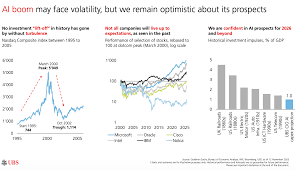
But this is not your average bull market. The S&P 500 is trading at a forward price-to-earnings ratio of roughly 21 times earnings, with certain valuation metrics — like the Shiller CAPE ratio, which breached 40 — at levels not seen since the peak of the dot-com bubble. Goldman Sachs has raised its S&P 500 earnings per share forecast to $340 for 2026, representing 24% annual growth. Yet the same firm warns that narrow market breadth and rising momentum are cautionary signals even as the fundamental case remains intact.
The story of the 2026 stock market is a study in contradictions: exceptional earnings growth coexisting with exceptional risk; record highs sitting alongside record uncertainty; universal optimism on AI tempered by universal anxiety about what happens if the AI investment cycle disappoints.
This article navigates all of it — the bull case, the bear case, the sector winners, the genuine risks, and what a rational investment strategy looks like in this environment.
The Bull Case: Earnings Growth Is the Foundation
At the heart of the 2026 market optimism is something concrete: earnings growth. Not speculative enthusiasm, not easy money from zero-rate policy — actual corporate profits growing at a historically exceptional pace.
According to J.P. Morgan Asset Management, S&P 500 earnings growth for 2026 has been revised upward to 17.6% — higher than the 14.9% forecast that began the year — with profits gaining steam as the year progresses. Q1 2026 delivered earnings growth of approximately 12.6–13.2%, marking the sixth consecutive quarter of double-digit profit expansion. Critically, 79% of S&P 500 companies exceeded analyst estimates in recent quarters, with an average upside surprise of 7.2% — suggesting that forecasts consistently underestimate corporate performance.
The technology sector is doing the heaviest lifting. The Tech sector is expected to deliver 27.1% earnings growth in Q1 2026 on 22.5% higher revenues. AI-infrastructure beneficiaries — semiconductor companies, cloud providers, enterprise software platforms — account for roughly half of the earnings growth for the entire index this year, according to Goldman Sachs. Without the tech sector’s contribution, aggregate S&P 500 earnings growth would drop from approximately 12.8% to just 5.6%.
Wall Street strategists have set their year-end targets accordingly. Morgan Stanley projected near-double-digit percentage returns for the S&P 500 with a target of approximately 7,500. Strategists in a Bloomberg survey established a consensus estimate of around 7,269 for the S&P 500 by year-end — modest by recent standards but positive nonetheless.
The macroeconomic backdrop has also been supportive. The Federal Reserve successfully navigated a soft landing in 2025, bringing inflation toward its 2% target without triggering a recession. A series of quarter-point rate cuts brought the federal funds rate to the 3.50%–3.75% range by the start of 2026, providing the liquidity conditions necessary to sustain elevated equity valuations.
The AI Factor: Engine of Growth or Source of Risk?
Artificial intelligence is simultaneously the strongest tailwind and the most debated risk factor for the 2026 stock market. Every major Wall Street institution has a view on it — and the views are remarkably consistent in direction, if not in conviction.
Fidelity International calls AI “the defining theme for equity markets” in 2026. BlackRock Investment Institute says the technology will likely “keep trumping tariffs and traditional macro drivers.” NatWest describes it as “a powerful engine of economic expansion.” JPMorgan Wealth Management summarizes the institutional consensus perhaps most bluntly: “The biggest risk, to us, is not having exposure to this transformational technology.”
The economic basis for this optimism has solidified in 2026. In late 2025, the first meaningful evidence of AI-driven productivity gains emerged in the services sector, where enterprise software companies began reporting measurable efficiency improvements. AI-related capital expenditure now contributes approximately 1.1% of U.S. GDP growth. The five major technology hyperscalers have committed over $1.5 trillion in capital expenditure over the next five years to build AI infrastructure — and their guidance continues to step higher, not lower, quarter after quarter.
The Bear Case on AI
But the bear case on AI is not frivolous, and it deserves honest consideration.
The S&P 500 is heavily concentrated in a small number of mega-cap technology stocks. If the AI investment cycle disappoints — through data center overbuild, slower-than-expected adoption, or a hyperscaler capex pause — the potential downside is severe. One analysis estimated a potential 20% downside for the S&P 500 if AI enthusiasm wanes, with technology leaders facing 20–50% retracements to 2024 valuation levels.
Capital Economics has argued that the AI-driven market has characteristics of a bubble — driven by investor excitement outpacing near-term commercial returns — and forecasts that over the next decade, U.S. stocks will deliver average annual returns of just 4.3%, well below the long-term historical average, as elevated valuations mean-revert.
The honest answer is that both the bull and bear cases are plausible. AI’s transformational potential is real — but so is the history of technology investment cycles where capital inflows precede monetization by years, and where disappointment along the way creates significant volatility.
Geopolitical Risk: The Energy Shock Factor
No analysis of the 2026 stock market is complete without addressing the geopolitical disruption that has reshaped the risk landscape mid-year.
The U.S.-Iran conflict that commenced in early 2026 has produced a significant energy price shock, severely disrupting global energy supplies and driving commodity prices sharply higher. The resulting inflation impact has several channels of effect on equity markets:
Cost Pressure on Margins: Elevated oil prices translate directly into higher fuel, logistics, manufacturing input, and packaging costs for companies across the economy. Businesses with significant energy or freight exposure face margin compression that could erode the earnings growth that has underpinned market optimism.
Consumer Purchasing Power: Higher energy costs reduce household disposable income, softening consumer demand even for businesses that have no direct energy exposure. If energy prices remain elevated for an extended period, the demand slowdown could ripple through multiple sectors.
Interest Rate Sensitivity: An energy-driven inflation spike could push the Federal Reserve to pause or reverse its easing cycle, sending interest rates higher and bond prices lower — a combination that historically weighs on equity valuations, particularly in richly priced markets.
The March 2026 drawdown — a roughly 9% pullback in the S&P 500 amid the initial shock — fell within historical norms for conflict-related pullbacks and has largely recovered. Historical precedent from prior military conflicts (including Iraq in 2003) suggests that markets often recover quickly when economic fundamentals remain sound and oil price spikes moderate. Whether that pattern holds in 2026 depends heavily on the duration and severity of the energy disruption.
Fidelity’s mid-year assessment captured the tension well: the bull run remains largely intact, but investor sentiment could shift at any time from earnings growth to the energy shock and its inflation implications. That kind of sentiment rotation is what creates the sharp, sudden corrections that test portfolio construction.
Sector Outlook: Where the Opportunities Are in 2026
Not all sectors are created equal in the 2026 market environment. The energy shock, AI infrastructure buildout, and shifting interest rate expectations have created clear winners and laggards.
Sector Leaders
Semiconductors and Technology: The runaway leader. AI infrastructure spending has not slowed, and hyperscaler capital expenditure guidance continues to step higher. NVIDIA continues to anchor the semiconductor group through data center revenue, while Broadcom rounds out leadership through custom silicon and networking. The Tech sector’s 27.1% Q1 earnings growth rate is extraordinary by any historical standard — and forward guidance from the major cloud buyers points toward multi-year supply commitments extending into 2027 and beyond.
Energy: The geopolitical disruption has made energy a tactical opportunity for investors willing to tolerate volatility. Elevated oil and gas prices support strong cash flows for producers and integrated energy companies, and the sector provides a natural hedge against the inflation risk that the Iran conflict has injected into portfolios. The risk, as Charles Schwab notes, is that geopolitical stress fades and prices revert — so sizing and entry point matter.
Defense and Industrials: Defense spending is rising across NATO members and U.S. allies in response to elevated geopolitical risk. Industrial companies benefit from AI data center construction, infrastructure investment, and reshoring manufacturing trends that have gained momentum. Both sectors offer a combination of earnings growth and relative insulation from AI-specific valuation risk.
Financials: Modest interest rate increases and a steeper yield curve are driving net interest income for banks. Structural trends in digitalization and fintech are creating new revenue opportunities. With stronger fundamental conditions, financials are delivering improved earnings per share and dividend payouts — making the sector an attractive source of income in the current environment.
Sector Laggards
Consumer Discretionary: Energy-driven consumer purchasing power erosion is a headwind for discretionary spending. If the energy shock persists, categories like retail, travel, and leisure face the most direct demand pressure.
Real Estate (Commercial REITs): The combination of still-elevated interest rates, ongoing work-from-home trends depressing office demand, and tight financing conditions makes commercial real estate challenging. While some subsectors — such as data center REITs benefiting from AI infrastructure — are performing well, broad commercial REIT exposure faces headwinds.
Utilities: Despite the theoretical tailwind from AI power demand, utility stocks have lagged in 2026. Rate base growth from infrastructure investment takes years to flow into earnings, and current yields look uncompetitive versus short-duration Treasuries. Defensive sectors with bond-proxy characteristics remain a tough sell in an environment where investors are getting paid adequately to hold shorter-duration fixed income.
Valuation: The Honest Conversation
The single most important risk factor for long-term investors in 2026 is valuation. The S&P 500 is not cheap by any historical measure.
Forward price-to-earnings of 21 times earnings is elevated relative to long-run averages. The Shiller CAPE ratio above 40 has historically been associated with below-average long-term returns. Morgan Stanley notes that with expectations so high, “the market looks brittle — and even small missteps could cause an outsized reaction.”
The saving grace — for now — is that earnings growth has kept pace with valuations. As Goldman Sachs observes, the valuation multiple is expected to remain roughly flat at 21 times earnings, with earnings growth rather than multiple expansion driving returns. This is fundamentally healthier than a market where multiples are expanding on weak earnings — the classic bubble dynamic.
But it means the runway for further multiple expansion is limited. Returns from here will need to be earned through earnings growth, not through investors becoming more willing to pay up for those earnings. And in a world where geopolitical risk, energy shocks, and AI uncertainty are all active variables, the margin for error is thin.
Investment Strategy: Navigating the 2026 Market
Given this landscape, several strategic principles are worth keeping in mind for investors building or managing portfolios in 2026.
Maintain Diversification Deliberately: The market’s narrow leadership — heavily concentrated in mega-cap technology — means that diversification requires intentional effort. Overweighting semiconductors and industrials for growth, holding energy and defense for cash flow and macro hedging, and trimming laggards rather than eliminating them provides a more resilient portfolio architecture than chasing the momentum leaders.
Do Not Fight the Earnings: Whatever one’s view on AI valuations, the earnings data in 2026 has been consistently strong. Six consecutive quarters of double-digit S&P 500 earnings growth, with company guidance consistently above 5- and 10-year averages, is a fundamental foundation that should not be dismissed in favor of macro narratives.
Size Geopolitical Risk Exposure Carefully: The energy sector provides real upside if conflict persists and a natural portfolio hedge against inflation — but it also reverses sharply if the geopolitical situation resolves. Position sizing rather than avoidance is the appropriate response.
Quality Over Speculation: In a market with stretched valuations and multiple active risk factors, the case for quality — companies with strong balance sheets, durable competitive advantages, pricing power, and consistent free cash flow — has never been stronger. Speculative positions in pre-revenue AI companies or heavily leveraged businesses carry asymmetric downside in this environment.
Watch the Fed: The easing cycle that has supported equity valuations is data-dependent. An energy-driven inflation resurgence could pause or reverse rate cuts, removing a key pillar of the bull case. Monitoring Federal Reserve communication — and positioning accordingly in both equity and fixed income — is essential
Conclusion: Exceptional Fundamentals, Exceptional Risk
The 2026 stock market presents investors with a genuinely complex landscape: exceptional earnings growth coexisting with exceptional valuation risk; an AI investment cycle with transformational long-term potential but near-term uncertainty; geopolitical shocks that are meaningful but, historically, temporary.
The bull market is intact — and its foundations in corporate earnings are real. But the margin for error is narrow, the range of outcomes is wide, and the strategies that worked in the low-rate, multiple-expansion era of the previous decade are not the strategies that will work in this one.
The investors who navigate 2026 well will be those who acknowledge both the opportunity and the risk — who stay invested in the earnings growth story while building genuine diversification, managing downside exposure, and resisting the temptation to concentrate in the names that have already had the biggest run.
As JPMorgan’s chief global strategist put it: “Most years, investing is about finding ways of increasing return. This year it will be about ways of reducing risk.”
In 2026, that is wisdom worth taking seriously.
Frequently Asked Questions (FAQs)
What is the S&P 500 forecast for 2026? Wall Street consensus targets for the S&P 500 cluster around 7,269–7,550 by year-end 2026, implying roughly 6–10% returns from early-year levels. Goldman Sachs projects earnings per share of $340 for 2026, representing 24% annual growth.
Is there an AI bubble in the stock market in 2026? Opinions are divided. Bulls argue that AI-driven earnings growth justifies current valuations. Bears point to stretched CAPE ratios, narrow market breadth, and the risk that AI capital expenditure delivers poor returns. Most major institutions maintain equity exposure while adding portfolio hedges.
Which sectors are performing best in 2026? Semiconductors, energy, defense, and industrials have been the standout performers in 2026. The technology sector overall is delivering roughly 27% earnings growth, anchored by AI infrastructure spending. Consumer discretionary and commercial REITs have lagged.
How is the Iran conflict affecting the stock market? The U.S.-Iran conflict that began in early 2026 has produced an energy price shock, creating cost pressure on corporate margins, reducing consumer purchasing power, and introducing inflation risk. The S&P 500 experienced a roughly 9% drawdown in March 2026, which has largely recovered, but the energy price uncertainty remains an active variable.
What is the Shiller CAPE ratio and why does it matter? The Shiller CAPE ratio (Cyclically Adjusted Price-to-Earnings) measures equity valuations relative to ten-year average earnings. At above 40, the 2026 CAPE is at levels historically associated with below-average long-term equity returns, suggesting the market is pricing in a great deal of future growth.
What is the best investment strategy for the 2026 stock market? Maintain diversification across leading sectors (semis, industrials, energy, financials), prioritize quality companies with strong earnings and balance sheets, size geopolitical and AI risk exposures carefully, and monitor Federal Reserve policy for any inflation-driven changes to the rate outlook.
Disclaimer: This article is for informational and educational purposes only. It does not constitute financial or investment advice. Past performance is not indicative of future results. Always consult a qualified financial advisor before making investment decisions.