
Meta Description: Tariffs, shifting trade rules, and diplomatic realignments are creating compounding risks for banks and financial institutions in 2026. Learn how geopolitical fragmentation affects lending, compliance, capital markets, and strategic planning — and what institutions must do to stay resilient.
Focus Keyword: geopolitical risk financial institutions tariffs trade 2026
Introduction: When Politics Becomes a Balance Sheet Problem
For decades, financial institutions operated in a world where geopolitics was background noise — something strategists monitored but rarely had to price into daily operations. That world no longer exists. In 2026, geopolitical risk has moved from the periphery of financial planning to its very center.
Tariffs are being deployed as instruments of national strategy. Trade rules that governed global commerce for seventy years are being rewritten or ignored. Diplomatic relationships between major economies are shifting faster than credit risk models can adapt. And at every turn, banks, insurers, asset managers, and payment processors find themselves caught in the crossfire — facing simultaneous pressures on lending portfolios, compliance obligations, capital market volatility, and client advisory mandates.
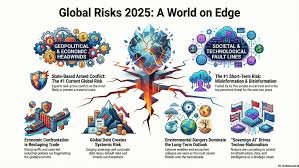
The World Economic Forum’s Global Risks Report 2026 delivers a striking verdict: economic risks have seen the sharpest increase in two-year rankings of any risk category — surpassing geopolitical, environmental, societal, and technological risks. This is the landscape financial institutions must now navigate. This article breaks down exactly what that means, why it matters, and what a robust institutional response looks like.
3.1%
IMF global GDP growth forecast 2026 — below 3.7% historical average
16.3%
Effective US tariff rate on EU goods in 2026
27%
Rise in WTO trade disputes between 2015 and 2024
40bps
Average sovereign CDS spread widening after major trade shocks (IMF)
The New Architecture of Trade Risk
To understand why geopolitical risk is so challenging for financial institutions specifically, it helps to understand the new architecture of trade policy that has taken shape since 2025.
The old system — anchored in the WTO’s multilateral rules, predictable tariff schedules, and a rough consensus on free trade as a global good — has been replaced by something far more volatile. Governments increasingly use tariffs, investment screening mechanisms, technology restrictions, and export controls not as economic tools but as instruments of industrial policy, national security, and geopolitical leverage. The UNCTAD’s March 2026 Global Trade Update summarizes it bluntly: trade rules have become less predictable, and this volatility can be particularly damaging for smaller, less-diversified economies.
Nearly two-thirds of global trade now takes place within value chains that are being actively reshaped by geopolitical tensions, industrial policy priorities, and new technologies. Firms are diversifying suppliers and relocating production closer to key markets — a process that creates disruption in the short term even when it builds resilience in the long run.
The US-China dimension
The US-China trade relationship remains the fault line around which global trade risk is organized. Through mid-2025, the United States imposed cascading tariffs on Chinese goods — including blanket tariffs invoking broad national security powers under the International Emergency Economic Powers Act (IEEPA). China responded with retaliatory tariffs and, significantly, export controls on rare earth materials — a non-tariff measure with profound implications for technology supply chains globally.
A partial de-escalation followed in May 2025, when both countries agreed to a significant reduction in tariffs — but the underlying strategic competition has not resolved. US-China negotiations continued through 2025 without reaching a durable framework, and financial institutions with exposure to either market must continue modeling scenarios ranging from renewed escalation to managed coexistence.
The US-EU dimension
Transatlantic trade relations have also been substantially disrupted. The effective US tariff rate on EU goods now stands at approximately 16.3%, a dramatic increase from pre-2025 levels. Tariffs on most EU goods are capped at 15%, with lower rates for specific sectors like aircraft and pharmaceuticals, and higher rates for steel and aluminum. The IMF estimates this constitutes a significant adverse demand shock for EU exporters — particularly given that US-EU trade accounts for nearly a third of global goods and services trade and 20% of EU exports.
The EU threatened to deploy its Anti-Coercion Instrument — a trade tool developed in 2023 specifically to counter economic coercion — which would put US financial services exports and capital flows at direct risk. While immediate tensions have partially cooled, the potential for expanded retaliation remains, and financial institutions operating across the Atlantic cannot assume the current status quo will hold.
Five Ways Geopolitical Risk Hits Financial Institutions Directly
1. Credit risk and loan portfolio deterioration
Tariffs and trade disruptions do not stay in the trade finance department — they migrate into the loan book. S&P Global’s 2026 banking risk analysis found that banks globally have been providing support to borrowers in tariff-affected sectors through loan moratoriums, payment deferrals, and special NPL (non-performing loan) treatment. While these measures mitigate immediate deterioration, they may obscure the true state of affected assets — creating hidden vulnerabilities that could surface during the next stress cycle.
The geopolitical risk index moved sharply higher in 2025, reaching levels not seen since 2022 — itself the most elevated period for geopolitical risk since the Afghanistan and Iraq wars. Banks with exposure to export-dependent sectors, particularly manufacturing, face compounding pressure: their borrowers are dealing with both higher input costs and reduced export market access simultaneously.
2. Trade finance and financial crime exposure
Perhaps the most direct and immediate pressure on financial institutions comes from the interaction between tariffs and financial crime. The World Economic Forum published a stark warning in February 2026: sudden shifts in tariffs and sanctions create volatility in trade flows, forcing banks to adjust risk models on the fly while leaving exploitable gaps. The European Central Bank has echoed this concern, warning that such shocks ripple through supply chains and financial systems in ways that criminals are quick to exploit.
The mechanism is well-documented. When tariffs rise or sanctions are imposed, new loopholes open across trade networks. Tariffs specifically can fuel trade-based financial crime by encouraging over- and under-invoicing, rerouting shipments through less-regulated markets, and creating inconsistencies in trade documentation. Financial institutions that process trade finance products — letters of credit, trade loans, documentary collections — suddenly find themselves at risk of inadvertently processing transactions connected to tariff evasion, sanctions circumvention, or customs fraud.
Red flag indicators banks must monitor: clients exposed to high-risk trade corridors newly impacted by tariffs; mismatches between trade finance documents and payment instructions; unusual third-party payment intermediaries; repeated last-minute changes to trade documents; and discrepancies in invoice pricing or declared countries of origin.
3. Capital markets volatility and sovereign risk
Geopolitical shocks transmit rapidly into capital markets — and their effects on sovereign debt markets are particularly significant for financial institutions with large government bond portfolios. IMF research shows that following major geopolitical or trade-related shocks, sovereign credit default swap (CDS) spreads widen by around 40 basis points in advanced economies — with sharper movements in countries with limited fiscal buffers or reduced policy space.
In early 2026, worrying trends emerged in US financial markets specifically: investors began fleeing US Treasury bonds — traditionally the world’s ultimate safe-haven asset — in favor of gold. Bond yields rose and the dollar depreciated, reflecting a loss of confidence in US trade policy predictability. For banks and asset managers that hold large Treasury portfolios, this represented an unprecedented reassessment of what “risk-free” actually means.
4. Sanctions and export control compliance complexity
The sanctions landscape has become dramatically more complex since 2025. New sanctions programs, novel uses of existing programs, and the deployment of FinCEN special measures against financial institutions linked to illicit activity have created a constantly shifting compliance environment. The reinstatement of sanctions on the International Criminal Court, heightened focus on Iran, North Korea, Venezuela, and Russia, and the simultaneous termination of Syria and West Bank programs — all in the same policy period — illustrate just how rapidly the compliance map can change.
For financial institutions, each sanctions change requires rapid updates to transaction screening systems, correspondent banking policies, and customer due diligence frameworks. The cost of getting this wrong is severe: regulatory enforcement actions, correspondent banking derisking, and reputational damage that can take years to repair. Forward-looking guidance from Morgan Lewis warns that companies should expect continued tariff movement, growing export control restrictions, and trade enforcement investigations throughout 2026 — with long-term implications for compliance planning.
5. Strategic uncertainty and investment paralysis
Beyond the direct operational impacts, geopolitical volatility creates a deeper and harder-to-quantify problem: strategic uncertainty. Rabobank’s 2026 Global Outlook identifies this clearly — when making economic forecasts and market analyses, traditional economic logic is becoming less decisive while geopolitics gains prominence. The question is no longer simply which economy grows fastest or which central bank cuts rates first. It is which country holds the strongest geopolitical cards and how willing it is to play them.
For financial institutions, this uncertainty causes hesitation and paralysis on large investment decisions — including hiring, technology infrastructure, and M&A activity. When trade policy can reverse overnight on the basis of a presidential announcement or diplomatic incident, the discount rates applied to long-term investments must increase to reflect that uncertainty. Lending to export-dependent businesses becomes riskier. Cross-border M&A advisory becomes more complex. Asset allocation models built on historical correlations become less reliable.
The Stagflation Trap: When Tariffs and Monetary Policy Collide
One of the most challenging aspects of the current geopolitical environment for financial institutions is the collision between tariff-driven inflation and the monetary policy cycle. Tariffs are, at their core, inflationary — they raise the price of imported goods, which flows through supply chains into consumer prices. But they also function as a demand shock, slowing economic activity in affected sectors.
This creates the classic stagflation dynamic: rising prices and slowing growth simultaneously. The Federal Reserve — and central banks generally — face an impossible trade-off. Cutting rates to stimulate growth risks entrenching inflation. Keeping rates high to fight inflation risks deepening the slowdown.
American Banker’s analysis captures the dilemma precisely: tariffs can both slow growth and raise prices, putting the Fed “in a quandary” that requires banks to continuously update their asset-liability strategies. A bank that models its interest rate sensitivity on a straightforward easing cycle could find itself significantly mispositioned if tariff-driven inflation forces the Fed to pause or reverse course.
Asset-liability management implication: Financial institutions need scenario models that include stagflationary paths — not just smooth easing cycles — to capture the full range of monetary policy outcomes under current trade conditions. Rabobank projects the Fed will cut to approximately 3% by end-2026, but warns that long-term yields may remain elevated due to persistent geopolitical risk premiums.
Geoeconomic Fragmentation: The Long-Term Structural Risk
Beyond the immediate operational pressures, financial institutions must grapple with a longer-term structural transformation: the fragmentation of the global financial and trading system along geopolitical fault lines. The ECB and European Systemic Risk Board (ESRB) published a joint report in January 2026 documenting the financial stability risks from geoeconomic fragmentation — noting that policy uncertainty surged during 2024 and 2025, with WTO trade disputes rising 27% between 2015 and 2024.
The worst-case scenario outlined by the WEF Global Risks Report 2026 is not just bilateral US-China trade conflict — it is a world where countries impose tariffs not only on specific adversaries but on all trading partners in a cascading series of retaliatory measures. Such across-the-board global tariffs would lead to a substantial contraction in global trade — a scenario that would fundamentally reshape the business models of financial institutions that depend on cross-border capital flows, trade finance, and international payment systems.
Even in less extreme scenarios, fragmentation forces a gradual but irreversible restructuring of global supply chains, payment corridors, and capital allocation patterns. Financial institutions that fail to anticipate and adapt to this restructuring risk finding their product offerings, client bases, and geographic exposures misaligned with where the global economy is actually heading.
How Financial Institutions Are Responding — and What Best Practice Looks Like
The institutions best positioned for this environment are those treating geopolitical risk not as a one-off scenario but as a permanent structural feature of the operating environment. Several response strategies are emerging as best practice.
Integrating geopolitical scenarios into risk models
Banks and asset managers are expanding their scenario planning beyond traditional macroeconomic variables to include geopolitical trigger events: trade policy reversals, sanctions expansions, diplomatic crises, and regional conflicts. This means building models that can run tariff escalation scenarios, sanctions-shock scenarios, and currency realignment scenarios simultaneously rather than sequentially.
Trade finance as a strategic advisory capability
Some banks are turning the tariff challenge into a client service opportunity. Citizens Financial’s trade finance unit, for example, helped corporate clients accelerate inventory purchases and use letters of credit to secure transactions ahead of new duty implementations. This positions trade finance not just as a product but as a strategic advisory function — differentiating institutions that can help clients navigate complexity from those that simply process transactions.
Enhanced KYC and trade-based financial crime controls
The intersection of tariffs and financial crime requires a specific upgrade to know-your-customer (KYC) and customer due diligence (CDD) frameworks. Institutions need to identify clients exposed to newly tariff-impacted trade corridors, screen for shipment rerouting patterns, and flag inconsistencies in trade documentation that may indicate attempts to circumvent duties or sanctions. AI-powered transaction monitoring is increasingly being deployed to detect these patterns at scale.
Supply chain finance diversification
US Bank’s supply chain finance analysis highlights how companies are rapidly shifting trade partners — China being supplanted by Bangladesh, Vietnam, and other lower-cost markets for certain goods; nearshoring accelerating for others. Financial institutions that provide supply chain financing need to follow these shifts, building credit assessment capabilities for new geographies and counterparties that were not previously part of their core portfolios.
Regulatory engagement and sanctions compliance investment
Given the pace of sanctions changes, institutions must invest in dynamic compliance infrastructure — not static rule sets. This means real-time screening updates, regular compliance program reviews, and active engagement with regulatory bodies to ensure sanctions interpretations are current. The cost of reactive compliance in this environment consistently exceeds the cost of proactive investment.
| Risk Channel | Primary Impact | Institutional Response |
|---|---|---|
| Tariff escalation | Loan portfolio quality, trade finance exposure | Stress testing with tariff scenarios; sectoral credit review |
| Sanctions changes | Compliance violations, correspondent banking risk | Dynamic screening systems; continuous legal monitoring |
| Capital markets volatility | Sovereign bond portfolio value; funding costs | Portfolio diversification; duration management |
| Trade-based financial crime | AML/KYC exposure; regulatory penalties | AI-powered trade document monitoring; enhanced CDD |
| Strategic uncertainty | Investment hesitation; M&A complexity | Geopolitical scenario integration into strategy planning |
| Geoeconomic fragmentation | Business model misalignment; supply chain shifts | Geographic portfolio rebalancing; new market capabilities |
Key Takeaways
- Geopolitical risk has become the dominant driver of economic uncertainty in 2026 — the WEF ranks economic risks as the fastest-rising category in its global risk survey.
- The effective US tariff rate on EU goods stands at 16.3%; US-China tariff conflict, though partially de-escalated, remains structurally unresolved.
- IMF research shows sovereign CDS spreads widen by around 40 basis points following major trade shocks — directly impacting banks’ government bond portfolios and funding costs.
- Tariffs create financial crime risk by incentivizing over/under-invoicing, shipment rerouting, and trade document fraud — placing AML obligations directly on financial institutions.
- The tariff-inflation interaction creates a stagflationary risk that complicates monetary policy forecasting and asset-liability management simultaneously.
- Geoeconomic fragmentation is a long-term structural trend — nearly two-thirds of global trade is being actively reshaped by geopolitics, industrial policy, and technology restrictions.
- Best-practice institutions are integrating geopolitical scenarios into risk models, upgrading trade finance compliance, and repositioning as strategic advisors to clients navigating complexity.
Conclusion: Geopolitics Is Now a Core Banking Competency
The financial institutions that will thrive in this environment are not those that simply react to each new tariff announcement or sanctions expansion. They are those that have fundamentally reorganized their risk management, compliance, and client advisory functions around the reality that geopolitical instability is not a temporary disruption but a permanent feature of the operating landscape.
This requires investment in capabilities that did not exist in traditional banking risk frameworks: geopolitical scenario modeling, trade-based financial crime detection, dynamic sanctions compliance, and supply chain advisory. It requires a new kind of strategic analyst — one who can translate a diplomatic incident in the South China Sea or a trade policy announcement from Washington into specific balance sheet implications within hours.
The old certainties — stable trade rules, predictable policy, and a broadly cooperative international economic order — are not coming back in the near term. Financial institutions that accept this reality and build their strategies around it will be positioned to capture the opportunities that disruption always creates. Those that continue waiting for a return to normalcy face the compounding risk of being caught unprepared when the next geopolitical shock arrives — and in 2026, the only certainty is that it will.