
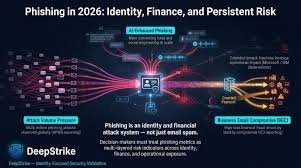
Meta Description: Fake invoices and compliance failures are no longer just financial risks — they are regulatory crises. Learn how cyber-enabled fraud is targeting finance teams in 2026, what the regulators are demanding, and how to protect your organization before it is too late.
Focus Keyword: cybersecurity finance fake invoices compliance failures 2026
Introduction: When a Single Email Costs Millions
Imagine your accounts payable team receives an invoice from a supplier you have worked with for years. The email address looks right. The invoice number follows your format. The amount is plausible. An employee approves it, the wire transfer goes out — and only days later does anyone realize the supplier’s email account had been compromised. The money is gone. So is your compliance standing.
This is not a hypothetical. It is the defining financial crime story of 2026. Fake invoices and cyber-enabled fraud have become the top concern for CEOs globally — surpassing even ransomware — while simultaneously triggering a wave of regulatory penalties that can dwarf the original losses. Organizations are now facing a double threat: the immediate financial hit of the fraud itself, and the longer-term regulatory fallout for failing to prevent it.
In this article, we break down exactly how this threat works, what the numbers say, what regulators now require, and what your organization must do to stay protected and compliant.
$20.9B
US cybercrime losses in 2025 (FBI IC3)
$6.7B
Lost to BEC attacks in 2025 alone
63%
Of organizations hit by BEC in 2024
1,760%
Rise in BEC attacks since AI went mainstream
The Scale of the Problem: By the Numbers
The financial damage from cyber-enabled fraud in the finance sector has reached staggering levels. According to the FBI’s 2025 Internet Crime Report, total US cybercrime losses soared 26% year-over-year to nearly $20.88 billion — with Business Email Compromise (BEC) and investment fraud emerging as the top two categories driving the majority of losses.
BEC — the category that includes fake invoice fraud, vendor impersonation, and payment redirection scams — accounted for approximately $6.7 billion in losses in 2025 alone. Over the past three years, the cumulative BEC loss figure has crossed $8.5 billion in the US alone.
The scale of targeting is equally alarming. The Association for Financial Professionals found that 63% of organizations experienced at least one BEC attempt in 2024. For organizations with more than 1,000 employees, there is a 70% weekly probability of being targeted by at least one BEC attack. And critically, 14% of BEC victims recover none of their lost funds.
The AI acceleration effect: Since the mainstreaming of generative AI tools, BEC attacks have grown from just 1% of all cyber attacks in 2022 to 18.6% in 2025 — a 1,760% increase. AI now allows attackers to craft near-perfect fake invoices, impersonate executives with voice cloning, and generate realistic payment requests at industrial scale.
How Fake Invoice Fraud Actually Works
Understanding the mechanics of fake invoice fraud is the first step toward defending against it. Modern attacks are far more sophisticated than a crudely worded email with a suspicious attachment. Today’s fraud follows a calculated playbook.
Stage 1: Reconnaissance
Attackers begin by researching the target organization — studying its vendor relationships, payment cycles, employee names, and email formats. LinkedIn, company websites, and sometimes previously breached data all feed this research phase. AI tools can now compress what used to take days of manual work into minutes of automated profiling.
Stage 2: Account compromise or impersonation
The attacker either compromises a real email account (making the fraud almost undetectable) or creates a spoofed domain — a subtle variation like “acme-corp.com” instead of “acmecorp.com.” Modern campaigns overwhelmingly prefer actual account compromise because, as research confirms, a message from a real account is the most convincing.
Stage 3: The fake invoice or payment redirect
The attacker inserts themselves into an existing payment thread, or initiates a new one referencing a real ongoing relationship. Common tactics include: sending a revised invoice with updated banking details; claiming the company has changed its payment processing provider; or generating a fake overdue invoice with urgency language to pressure quick payment without verification.
In one of the most cited examples of this fraud’s reach, Google and Facebook collectively lost over $100 million to a scammer who simply sent invoices impersonating a legitimate hardware supplier both companies actually used. The requests matched real business relationships — employees approved them without a second thought.
Stage 4: Money movement before detection
Wire transfers clear quickly. By the time the fraud is detected — often days or weeks later — the funds have already been moved through multiple accounts across jurisdictions. This is why only a fraction of BEC losses are ever recovered.
The Compliance Dimension: Why Fraud Is Now a Regulatory Crisis
Here is where the stakes double. Falling victim to invoice fraud is costly. But in 2026, failing to have adequate controls in place to prevent it triggers a separate, potentially larger, regulatory liability. Regulators on both sides of the Atlantic have made this unambiguous.
FINRA’s 2026 Regulatory Oversight Report
In December 2025, FINRA published its 2026 Annual Regulatory Oversight Report — a nearly 90-page document that elevated cybersecurity to a core operational and compliance risk. The report explicitly states that firms must maintain robust cybersecurity programs aligned with SEC and FINRA rules, including safeguards for customer information and identity theft prevention. Key threats highlighted include social engineering, phishing, payment fraud, and account takeovers — exactly the vectors used in fake invoice attacks.
SEC’s 2026 Examination Priorities
The SEC’s 2026 examination priorities mark a historic shift: concerns about cybersecurity and AI have displaced cryptocurrency as the industry’s dominant risk topic for the first time in five years. The SEC will be scrutinizing whether firms have implemented adequate controls against cyber-enabled fraud — and a fraudulent payment approval will be evidence of control failure, not just bad luck.
NYDFS Part 500: Real Fines, Immediate Enforcement
The New York Department of Financial Services (NYDFS) has been the most aggressive state regulator on cybersecurity. A critical deadline passed in April 2026: the first annual certification covering universal multi-factor authentication (MFA) and asset inventory provisions. Firms that failed to certify faced immediate enforcement action. The penalty scale is severe: the NYDFS levied a $2 million civil penalty in 2025 for Part 500 violations. Historical enforcement actions have reached $30 million, and ongoing non-compliance can result in fines of $250,000 per day.
DORA in Europe: Operational Resilience is Now Law
The EU’s Digital Operational Resilience Act (DORA) has been fully in force since January 2025. For any organization with European operations or clients, non-compliance carries penalties of up to 2% of total global annual turnover for financial institutions, plus daily fines for ongoing violations. DORA requires, among other things, documented risk assessments for every third-party vendor relationship — precisely the relationships that fake invoice fraud exploits.
| Regulation | Jurisdiction | Maximum Penalty | Key Requirement |
|---|---|---|---|
| NYDFS Part 500 | New York (US) | $30M+ / $250K per day | MFA, annual certification, incident reporting |
| SEC Reg S-P | US Federal | Enforcement action | Detect, respond, recover from unauthorized access |
| DORA | European Union | 2% global turnover | ICT risk framework, third-party vendor oversight |
| FTC Standards | US Federal | Civil penalties | Mandatory cybersecurity for non-bank financials |
| FINRA Rules | US (broker-dealers) | Suspension/fines | Cybersecurity program, customer data safeguards |
The AI Factor: How Technology Is Supercharging Both Sides
Artificial intelligence is the single most important variable reshaping this threat in 2026. It is a double-edged sword — accelerating both the attacks and the defenses.
How attackers are using AI
Gone are the days when a fake invoice could be spotted by awkward phrasing or obvious errors. Generative AI now produces invoice emails that are linguistically indistinguishable from genuine business correspondence. Voice cloning technology allows attackers to impersonate a CEO on a phone call, confirming a fraudulent payment request. Deepfakes can generate video “confirmations” from fake executives.
As one compliance expert noted at a 2025 risk conference: for less than $1, someone can go on the dark web and buy a deepfake sufficient to open a bank account. The barrier to committing sophisticated financial fraud has essentially collapsed.
Vendor email compromise (VEC) — a subset of BEC targeting supplier relationships — saw a 137% increase in 2023 and has continued accelerating. By 2025, nearly 40% of organizations were experiencing a VEC attack every single month.
How defenders are responding
Financial institutions are deploying AI-powered fraud detection that analyzes communication patterns, flags behavioral anomalies in invoice approvals, and monitors for unusual payment instructions. Real-time fraud analytics embedded into accounts payable workflows can now flag a payment request that deviates from historical vendor patterns — even when the email address appears legitimate. The challenge is that attackers adapt their techniques in response, creating the “arms race” dynamic that compliance professionals are now living with daily.
Third-Party Risk: The Hidden Attack Surface
One of the most significant and underappreciated risks in financial services cybersecurity is third-party vendor exposure. Attackers who cannot penetrate a well-defended bank directly will instead compromise a smaller vendor or technology provider that has access to the bank’s systems or payment workflows.
FINRA’s 2026 report devoted an entire section to third-party risk landscape management, noting it as a distinct compliance obligation. DORA similarly requires financial entities to maintain registers of all third-party relationships with documented risk assessments, contract details, and exit strategies. Under NYDFS Part 500, vendor risk is a specific examination focus.
Key insight: When a vendor is compromised, the financial institution that relies on that vendor faces both the direct financial loss from any fraudulent transactions AND the compliance exposure for failing to adequately oversee that vendor relationship. The risk is multiplicative, not additive.
What Good Controls Look Like: A Practical Framework
Given the convergence of financial and regulatory risk, organizations need controls that simultaneously prevent fraud and satisfy regulators. The following framework addresses both dimensions.
1. Multi-factor authentication on all financial systems
This is now non-negotiable — NYDFS Part 500 mandates it, and the April 2026 certification deadline has passed. Every access point to accounts payable, banking portals, and financial systems must require MFA. Organizations that have not yet implemented universal MFA are actively non-compliant with multiple regulatory frameworks simultaneously.
2. Out-of-band verification for payment instruction changes
Any change to banking details, payment routing, or vendor contact information must be verified through a separate, pre-established communication channel — not by replying to the same email that requested the change. This single control defeats the majority of fake invoice attacks. Courts and insurers evaluate whether organizations exercised “reasonable care” in verifying payment instructions — without this control, liability for fraudulent payments falls squarely on the organization.
3. Invoice verification workflows with automated anomaly detection
Deploy AI-assisted controls that flag invoices with unusual characteristics: new banking details, first-time vendor contacts, amounts outside historical ranges, urgency language, or domain variations. Do not rely solely on human review — attackers specifically craft fraudulent invoices to pass casual human inspection.
4. Employee training — updated for AI-era threats
Traditional phishing training that focuses on typos and suspicious links is no longer sufficient. Finance teams need training specifically on: recognizing vendor impersonation; understanding that AI can produce perfect-sounding emails; knowing the verification procedures for payment changes; and understanding their personal liability exposure in approving fraudulent payments without due diligence.
5. Incident response and regulatory notification procedures
Under SEC Regulation S-P and NYDFS Part 500, organizations must have documented procedures to detect, respond to, and report cybersecurity incidents. A fraudulent payment that is discovered and reported with a documented response demonstrates regulatory compliance even in the event of a successful attack. Absence of such procedures transforms a victim status into a compliance violation.
6. Third-party vendor cybersecurity assessments
DORA requires documented risk assessments for every significant vendor relationship. FINRA expects firms to evaluate the cybersecurity posture of their technology service providers. Build vendor cybersecurity questionnaires into your onboarding process and schedule annual reviews for high-risk vendors.
The Personal Liability Question
One of the most significant developments in financial cybersecurity regulation is the shift toward personal liability for compliance failures. The UK’s new “failure to prevent fraud” offense — which is expected to see its first self-reporting cases in 2026 — creates criminal exposure for organizations that fail to implement reasonable fraud prevention measures.
In the US, courts and insurers are increasingly applying comparative fault analysis to BEC fraud cases: if both parties failed to exercise reasonable care, both may bear a portion of the loss. CFOs, compliance officers, and accounts payable managers who approved fraudulent invoices without following documented verification procedures are finding themselves personally implicated in legal proceedings.
Cybersecurity, in other words, is no longer an IT department issue. It is a C-suite liability.
Key Takeaways
- Fake invoice fraud and BEC attacks caused $6.7 billion in losses in 2025 — the FBI’s top financial crime category.
- AI has made fraudulent invoices nearly indistinguishable from legitimate ones, and the attack volume has grown by over 1,700% since 2022.
- Regulators (SEC, FINRA, NYDFS, DORA) now treat inadequate cybersecurity controls as a compliance failure — separate from and additional to the financial loss itself.
- NYDFS penalties reach $30 million and beyond; DORA fines can hit 2% of global annual turnover.
- Third-party vendor relationships are a primary attack vector and a primary regulatory focus area simultaneously.
- Out-of-band verification for payment instruction changes is the single most effective control against fake invoice fraud.
- Personal liability for compliance failures is expanding — this is a C-suite issue, not just an IT issue.
Conclusion: The Double Threat Demands a Dual Response
The convergence of financial fraud risk and regulatory compliance risk in cybersecurity represents one of the most significant operational challenges facing financial services organizations in 2026. Fake invoices and BEC attacks are no longer simply financial problems that can be absorbed as a cost of doing business. They are simultaneously evidence of compliance program failure — and regulators are treating them as such.
The organizations that will navigate this environment successfully are those that build controls strong enough to prevent fraud and robust enough to satisfy regulators in the event that fraud still occurs. That means documented procedures, verified vendor communications, AI-assisted detection, mandatory MFA, and a compliance culture that treats every payment approval as a potential target.
The attackers are using every tool available to them. The regulators are watching. The question is whether your organization’s controls are keeping up with both.